Want to lower your energy expenses in field service operations? Start here. Energy costs from fleets, office utilities, and equipment usage can drain your budget. But with smart strategies like energy audits, route optimization, and equipment upgrades, you can cut costs while improving efficiency. Here's how:
- Fleet Fuel Savings: Use route optimization tools to reduce travel time and fuel use. Regular vehicle maintenance and transitioning to electric vehicles can further lower costs.
- Office Energy Efficiency: Conduct energy audits to identify waste, upgrade to LED lighting, and install occupancy sensors. Smart energy management systems can automate savings.
- Equipment Upgrades: Replace outdated devices with energy-efficient models like ENERGY STAR equipment to save up to 40% on electricity bills.
- Real-Time Monitoring: Leverage tools like AI-powered platforms to track and optimize energy usage across fleets and facilities.
Key Tip: Shift energy-heavy tasks to off-peak hours to reduce capacity charges by 10-15%. Small steps like turning off unused equipment and sealing air leaks can add up to big savings.
These actionable measures not only cut costs but also improve operations, making your business more efficient and reliable.
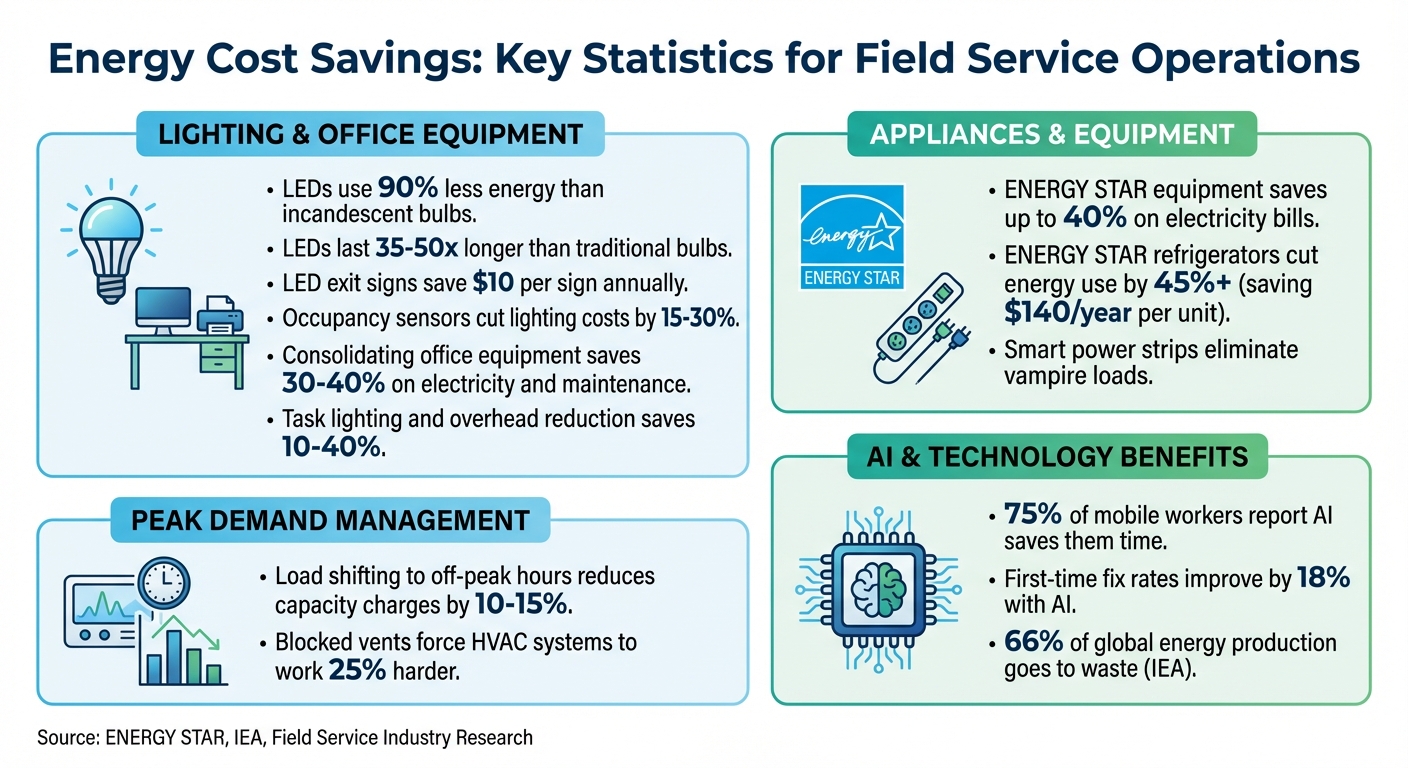
Energy Cost Savings Statistics for Field Service Operations
1. Create Your Energy Performance Baseline
How to Conduct an Energy Audit
The first step to cutting energy waste is knowing where it happens. Start by contacting your utility provider - many offer free or low-cost energy audits.
Timing matters. Conducting audits during off-hours often uncovers hidden inefficiencies. For example, an after-hours walk-through can reveal equipment running unnecessarily, lights left on, or HVAC systems operating when they shouldn't be. Pay attention to unusual noises or redundant lighting. As ENERGY STAR puts it:
Equipment may operate very efficiently, but if it's 'on' when 'nobody's home,' the only thing happening is energy waste.
If you have a smart meter, compare your energy usage at 3:00 AM to your usage at 7:00 PM. If the numbers are close, you might have "vampire loads" aka devices draining power even when not in use.
To establish a baseline, review energy data from the past 6 to 12 months. Portable dataloggers can help you monitor whether equipment is drawing power during scheduled "off" times. Take a systematic approach: check equipment controls, pressures, temperatures, power usage, and flow rates. Inspect insulation for damage, look for air leaks, and test refrigerator door seals with a dollar bill. If it slides out easily, the seals need replacing.
Setting Clear Energy-Saving Goals
Once you've established your energy baseline, you can set specific, measurable goals to reduce consumption.
Start by categorizing opportunities into two groups: "Low-Cost Measures" (like behavioral changes or after-hours audits) and "Rapid Payback Measures" (such as LED lighting upgrades or occupancy sensors). This helps you prioritize actions based on your budget and expected returns.
Define clear targets for different areas. For instance, installing occupancy sensors can cut lighting costs by 15% to 30%. Similarly, consolidating stand-alone office equipment into one networked device for every 10 users can save 30% to 40% in electricity and maintenance costs. Use these benchmarks to set realistic, actionable goals.
Document your sensor settings, control strategies, and equipment schedules. Track your progress monthly and adjust for seasonal changes. As ENERGY STAR highlights:
Transparency is the first step to getting the people inside your building or space interested in what you're doing. When you share your energy reduction goals and progress toward saving, employees and occupants sit up and take notice.
To reduce peak demand, explore load shifting. Rescheduling energy-heavy processes to off-peak hours. For example, shifting production schedules or using on-site energy storage has helped similar operations cut peak demand by 10-15%.
Finally, document the savings from low-cost improvements and reinvest those funds into larger energy-efficiency projects. This creates a cycle where each improvement funds the next, steadily increasing your overall savings over time, while also boosting profit margins in your service business.
2. Reduce Fleet Fuel Costs
Route Optimization Tools
One of the easiest ways to lower fuel expenses is by using route optimization tools. Field service management software helps cut fuel costs by considering estimated mileage and fuel needs during the quoting and scheduling process. This ensures travel costs are factored in before the job even begins. Automated scheduling reduces unnecessary travel time for technicians, which means less fuel wasted. Additionally, the software can apply variable travel and diagnostic fees based on drive time, helping to recover fuel expenses directly within the job quote.
Features like automated on-the-way notifications and real-time communication also play a big role. They reduce the chances of missed appointments, which means fewer wasted trips and less fuel burned. By setting travel or diagnostic fees that vary by department or distance, you can ensure longer routes are priced to account for increased fuel use.
Regular Vehicle Maintenance
Keeping your vehicles in top shape is another key to maintaining fuel efficiency. Standardized maintenance workflows ensure consistent upkeep across the team. Digital checklists guide technicians through each step, reducing the risk of errors.
"Staff who spend more time on preventive operations generally spend less time 'fighting fires' and troubleshooting operational problems." – EnergyStar.gov
Using logic-based digital forms that flag skipped steps or inconsistencies helps reinforce proper maintenance practices in real-time. Monitoring actual equipment performance against expected benchmarks can reveal issues before they start affecting fuel efficiency. Replacing outdated paper checklists with digital forms that adapt to specific assets makes inspections quicker.
Short, 10-minute microtraining sessions or in-app reminders can help reinforce maintenance standards without disrupting daily workflows. Regular audits of maintenance schedules ensure vehicles are only used when necessary and are tuned for seasonal conditions.
Switching to Fuel-Efficient or Electric Vehicles
Modernizing your fleet with fuel-efficient or electric vehicles (EVs) is another way to cut fuel costs. It's likely you won't be able to swap out every vehicle in your fleet for an electric vehicle, but maybe you can swap some. Many utilities offer rebates or reduced rates for electricity use during off-peak hours, making EV operation drastically cheaper. Electric vehicles and plug-in hybrids can take advantage of these time-based rates by recharging overnight when demand and costs are lower. When considering EVs or other fuel-efficient options, it’s important to evaluate your utility’s rate structure and whether your service area supports predictable recharging schedules during off-peak hours.
3. Reduce Office and Facility Energy Use
Upgrading to Energy-Efficient Equipment
Swapping out old office equipment for ENERGY STAR-certified models is a straightforward way to cut energy bills. Take lighting, for instance: LEDs consume up to 90% less energy than traditional incandescent bulbs and can last 35 to 50 times longer. Even smaller upgrades, like replacing outdated exit signs with LED versions, can save around $10 per sign annually on electricity costs.
Another impactful change is consolidating equipment. Instead of equipping every desk with separate printers, copiers, and scanners, consider using a single multifunction device shared by 10 or more users. This shift can slash electricity, hardware, and maintenance expenses by 30% to 40%. Similarly, upgrading to ENERGY STAR refrigerators can cut energy use by more than 45%, potentially saving $140 a year per unit.
Don't overlook smaller investments like smart power strips or occupancy sensors. These tools can tackle energy waste by eliminating "vampire loads" and trimming lighting expenses by 15% to 30%. Even simple measures, like applying window films to reduce cooling needs or using task lighting instead of overhead fixtures, can add up to noticeable savings. These equipment upgrades provide a solid foundation for introducing advanced energy management systems.
Installing Smart Energy Management Systems
Once you've upgraded your equipment, the next step is implementing smart energy management systems to monitor and control energy use in real time. Tools like smart thermostats and energy management systems (EMS) give you detailed insights into your facility's energy consumption. These systems can highlight inefficient equipment running after hours or contributing to "vampire loads." Programming them to operate only during necessary hours eliminates wasteful overnight energy use.
Advanced systems can also help you shift energy consumption to off-peak hours when electricity rates are lower, allowing you to benefit from utility rebates and time-based pricing. Integrated lighting controls, working alongside occupancy sensors and photocells, automatically adjust lighting based on room usage or natural daylight availability. However, many businesses underutilize these systems, only relying on basic on/off features and missing out on further savings.
To keep these systems running efficiently, regular calibration is essential. Thermostats and sensors must provide accurate readings to ensure control strategies remain effective. Documenting energy-efficient settings and control sequences is equally important as it prevents valuable knowledge from being lost during staff turnover.
4. Build an Energy-Conscious Workplace Culture
While technology plays a key role, your team’s involvement is just as critical. Creating an energy-conscious workplace starts with strong leadership commitment and open communication. Sharing recent energy usage data in common areas, like break rooms, helps employees see the direct impact of their efforts.
"Transparency is the first step to getting the people inside your building or space interested in what you're doing." – ENERGY STAR
Visual cues can also encourage energy-saving habits. For example, place signs near light switches, add sticky notes on equipment reminding people to power down, or use light switch covers with energy-saving messages. Some businesses even use "oops" and "wow" stickers during energy audits to highlight wasteful or exceptional practices. Simple actions, like turning off lights when natural daylight is sufficient or when rooms are empty, can reduce lighting costs by 10% to 40%.
To take it a step further, form departmental "green teams" to lead peer-to-peer education on energy-saving practices. Include energy conservation tips in new hire orientations to make sustainability a core part of your workplace culture from day one. Conducting after-hours walk-throughs every six months can uncover unnecessary energy use, like blocked vents that force HVAC systems to work 25% harder. Small rewards, such as pizza parties or public recognition for meeting energy goals, can keep employees motivated without stretching your budget.
When cutting-edge systems work hand-in-hand with an engaged team, energy efficiency becomes a shared success story.
5. Use Technology for Real-Time Energy Monitoring
Benefits of Real-Time Energy Data
Real-time energy monitoring provides a level of transparency that traditional methods simply can't match. It allows you to see exactly where your energy dollars are going, whether it's a truck idling unnecessarily or office equipment left running overnight. By breaking down energy consumption into specific components like motors, compressors, and HVAC systems, it becomes much easier to identify the biggest contributors to high costs. Plus, automated alerts can notify you the moment energy usage crosses predefined limits, giving you the chance to address inefficiencies before they escalate.
The International Energy Agency reports that a staggering 66% of global energy production goes to waste. Real-time data can help recover part of this loss by exposing hidden energy drains and revealing peak usage times that lead to higher utility bills. For example, you can schedule energy-heavy tasks like EV charging or equipment maintenance during off-peak hours when electricity rates are lower. This kind of precision shifts energy cost management from guesswork to informed, targeted action. And with AI tools, you can take these insights even further.
Using AI Tools to Optimize Energy Usage
While real-time data shines a light on inefficiencies, AI takes it a step further by turning those insights into actionable strategies. AI-powered platforms analyze raw data and recommend immediate steps to improve energy efficiency.
Here at ServiceEmpire.AI, our tools can help you create energy-saving SOPs across your fleets, offices, and field operations. These tools can help you optimize your routes, optimize your scheduling, and create company-wide checklists for reducing fuel consumption and vehicle wear.
The benefits of AI in energy management are clear. Over 75% of mobile workers report that AI saves them time, and first-time fix rates improve by 18%. Coca-Cola, for example, uses AI to predict equipment failures by analyzing maintenance histories, ensuring technicians arrive prepared with the right parts and avoid unnecessary trips. Similarly, a major North American auto club handling 6 million roadside events annually uses AI to brief employees before each job, saving an average of 5 minutes per event - adding up to over 30 million minutes saved every year.
"In our day-to-day lives, we're utilizing AI without even realizing it. Our customers now expect real-time responses, and businesses that don't adapt will lag behind." – Michael Potts, Executive Vice President, ACCO Engineered Systems
6. Measure Savings and Improve Over Time
Setting KPIs for Energy Efficiency
Start by establishing a baseline for energy usage. Use 6–12 months of historical data to spot trends and set a benchmark that reflects your operation’s energy profile. For facilities, track Energy Use Intensity (EUI). This measures energy consumption per square foot. If you manage a fleet, focus on fuel consumption per vehicle or job to assess how factors like route planning or vehicle weight affect costs. Equipment performance is another key area - compare actual output to expected performance to catch inefficiencies before they escalate.
Submetering and energy monitoring software can help you drill down into specific departments or vehicle groups, making it easier to pinpoint savings opportunities or inefficiencies. For field service teams, consider a vehicle-as-warehouse system to track inventory by truck. This approach reduces unnecessary weight and minimizes extra trips, which translates directly into fuel savings. Keep a detailed record of sensor settings, location changes, and control strategies to avoid losing progress when staff transitions occur.
By continuously monitoring and documenting these metrics, you create a feedback loop that ties into your broader energy management strategy. Regular reviews ensure that your targets remain aligned with operational goals.
Regular Reviews and Strategy Adjustments
Maintaining energy efficiency requires ongoing evaluation. With your KPIs in place, schedule regular reviews to ensure progress stays on track. Conduct periodic audits during non-operational hours by walking through your facility. Listen for unusual equipment noises and check for lights or devices left running unnecessarily. These walk-throughs can uncover "vampire loads" - hidden energy drains that quietly inflate costs. Adjust HVAC settings seasonally to prevent energy waste; a setup optimized for summer cooling might not be efficient during cooler months.
Real-time data can reveal additional opportunities. For instance, smart meters allow you to compare energy use during peak hours versus off-peak times, such as 3 AM. If you notice significant energy consumption during unoccupied hours, it could indicate equipment that needs to be powered down or replaced. Cutting down on peak usage can also reduce capacity charges.
Take advantage of tools like ServiceEmpire.AI to streamline these adjustments. Our free solutions help create Standard Operating Procedures for energy reporting and carbon footprint tracking, ensuring consistency in your energy management practices.
Conclusion and Key Takeaways
Reducing Energy Costs Gives You a Competitive Edge
Lowering energy costs has a direct impact on your bottom line, boosting your facility's Net Operating Income. By effectively managing capacity charges, you can achieve notable cost reductions. But the benefits go beyond just cutting expenses. Improved energy efficiency strengthens operational resilience. Having on-site energy storage and generation ensures your business can keep running smoothly, even during power outages.
Smart energy management saves money on utility bills, and long-term, it also creates opportunities to fund future upgrades. Plus, it reduces the chances of unexpected equipment failures or unplanned downtime, which can be costly. As Brian Lagas, Manager at NIST MEP, explains:
"Scaling back your energy expenses can improve your bottom line and lead to increased profitability. If you do not have a strategic plan to conserve energy, it is time for action."
These benefits set the stage for actionable steps you can take right now.
Summary of Action Steps
To start reducing energy costs and gaining a competitive edge, consider these immediate actions:
- Conduct a nighttime audit to identify vampire loads and equipment running unnecessarily.
- Manage your Peak Load Contribution by shifting energy-heavy tasks to off-peak hours, which can lower capacity charges for the next year.
- Replace incandescent bulbs with LED lighting, which uses up to 90% less energy, and install occupancy sensors in low-traffic areas to cut lighting costs by 15% to 30%.
- Enable power management features on office equipment and consolidate stand-alone devices to save 30% to 40% on electricity and maintenance
Lastly, take advantage of tools like ServiceEmpire.AI to create standard operating procedures for energy reporting and tracking. This ensures your energy management practices remain consistent and effective over time.
FAQs
How can route optimization tools help lower fuel expenses in field service operations?
Route optimization tools are a game-changer for cutting fuel costs. They create efficient, traffic-aware routes for your technicians, helping to avoid unnecessary mileage and reduce idle time. Plus, they can adjust routes in real time to dodge delays, making travel faster and more fuel-efficient.
By refining travel routes, your business saves on fuel, improves scheduling, and minimizes wear and tear on your fleet. This means lower operational costs across the board.
Why should you conduct energy audits during off-hours?
Conducting energy audits during off-hours, like late at night or early in the morning, can uncover equipment, lighting, or HVAC systems running when they don’t need to be. These hidden energy drains, often called "vampire loads", can quietly inflate utility bills and cause unnecessary wear on your equipment.
By examining energy usage during these quieter times, you can spot inefficiencies, reduce cooling demands, and measure the effects of any changes you implement. Applying these insights to your operations can help cut costs, extend the life of your equipment, and enhance overall efficiency - all of which can positively impact your bottom line.
How can AI tools help field service businesses save on energy costs?
AI tools are proving to be game-changers for cutting energy costs in field service operations. By streamlining processes and reducing waste, these tools help businesses operate more efficiently. For example, predictive maintenance powered by AI can spot potential equipment issues early. This means repairs can be scheduled before a major breakdown occurs, saving money and reducing the need for emergency trips that burn extra fuel. On top of that, AI-driven routing systems can map out the most efficient schedules, slashing mileage, cutting idle time, and lowering emissions.
In industries that consume a lot of energy, AI takes things further by forecasting energy demand, optimizing grid operations, and reducing excessive equipment cycling. These adjustments help keep energy usage in check. Here at ServiceEmpire.AI we offer free AI-powered solutions tailored for field service businesses. From route optimization and maintenance schedules to SOPs for fleets fuel savings, these tools make it easier to manage fuel costs, extend the lifespan of equipment, and even cut down on office electricity bills. The result? Real savings that go straight to the bottom line.
Lead With Confidence and Clear Direction