If you’re running a local service business - like plumbing, HVAC, or landscaping - your success depends on reaching customers nearby. The key is focusing on targeted local marketing to connect with people in your service area. This approach helps cut costs, boosts conversions, and builds trust within your community.
Here’s a quick breakdown of what works:
- Define Your Service Area: Focus on neighborhoods that bring in the most revenue and stay close to your base for better profitability.
- Local SEO: Optimize your Google Business Profile, website, and reviews to rank higher in local searches.
- Geo-Targeted Ads: Use Google and social media ads to target high-intent customers in specific locations.
- Reviews and Referrals: Build a system to collect reviews and encourage referrals for steady, low-cost leads.
- Retention Systems: Use email and SMS to stay connected with past customers and drive repeat business.
- Data-Driven Scaling: Track metrics like cost per booked job and average ticket size to refine your strategy.
Know Your Market and Target Customers
Before diving into marketing, take a step back and figure out exactly who your ideal customers are and where they’re located. Many local service businesses waste money advertising in areas that are too far away or don’t align with their ideal customer base. The key is to focus your efforts on neighborhoods and customer types that bring in the most revenue. A solid understanding of your market is the foundation for effective local SEO and targeted ad campaigns.
Define Your Service Area
Your service area plays a huge role in profitability, response times, and how well-known you are in the community. Start by mapping out where your current customers are located. Look at past job records to spot patterns - where are your customers clustered, and where are the gaps?
Stick to areas close to your base for your primary service zone. These are the neighborhoods where you can respond quickly and build a strong local reputation. For locations further out, consider treating them as secondary zones. You might charge travel fees or set specific conditions to ensure these jobs are still worth your time.
To organize your service area, group neighborhoods or zip codes together and gather some basic demographic details, like median household income, home values, and the age of the homes. For example, older neighborhoods might need more frequent repairs or upgrades, while newer areas may not. Tailor your service offerings and messaging to reflect these differences. And if your business also serves commercial clients, don’t forget to include office parks or retail centers, as they often have unique needs and decision-making processes.
Build Customer Profiles from Your Data
Who are your best customers? The ones who are profitable, easy to work with, and likely to recommend you to others? To find more of these ideal clients, dig into your CRM or job management system. Look at your highest-value jobs and identify patterns: what kind of properties do they own, what services do they request, and how did they find you?
For instance, if you’re in HVAC, your most profitable customers might be long-term homeowners with larger properties. They might start with small repairs but eventually invest in full system upgrades. If you’re a plumber, you might notice that older homes with recurring issues are a consistent source of business. Use these insights to shape your marketing strategies and target similar customers.
It’s also important to understand your customers’ budgets and decision-making habits. Some people are price-sensitive, while others are willing to pay more for quality and long-term savings. Customer feedback and interviews can help you refine these profiles even further, giving you the tools to design marketing campaigns that truly resonate.
Use Service Empire AI for Market Research
Once you’ve gathered your initial data, take things to the next level with tools specifically designed for service businesses. Our tools here at Service Empire AI help you pinpoint profitable opportunities and create strategies tailored to your trade.
For example, you can use their tools to analyze neighborhoods based on housing age, income levels, and demand. Their pricing and margin benchmarks ensure that you’re accounting for travel costs and other variables when setting your rates. The market playbooks provide step-by-step guidance for assessing your presence in local areas and identifying underserved neighborhoods where you can stand out.
Service Empire AI also offers prompts for expanding into new locations and tools like the review and reputation flywheel, which helps refine your customer profiles over time. These analytics integrate seamlessly with their broader marketing systems, keeping your focus on actionable strategies that drive results.
The best part? Service Empire AI’s tools and strategies come from operators who’ve scaled their businesses to nine figures. It’s not about collecting endless data. It’s about making smarter decisions with the information you already have. Armed with precise market insights, you’ll be ready to fine-tune your local SEO efforts and fill your schedule with profitable jobs.
Set Up Local SEO
Local SEO helps your business stand out when people nearby search for the services you offer. Picture this: a homeowner types "plumber near me" or "HVAC repair in [city name]" into Google. If your local SEO is on point, your business can pop up in those search results, putting you right in front of potential customers. It all starts with a solid Google Business Profile, extends to your website, and is boosted by glowing customer reviews. Together, these elements form a powerful strategy to help you dominate your local market.
Set Up Your Google Business Profile
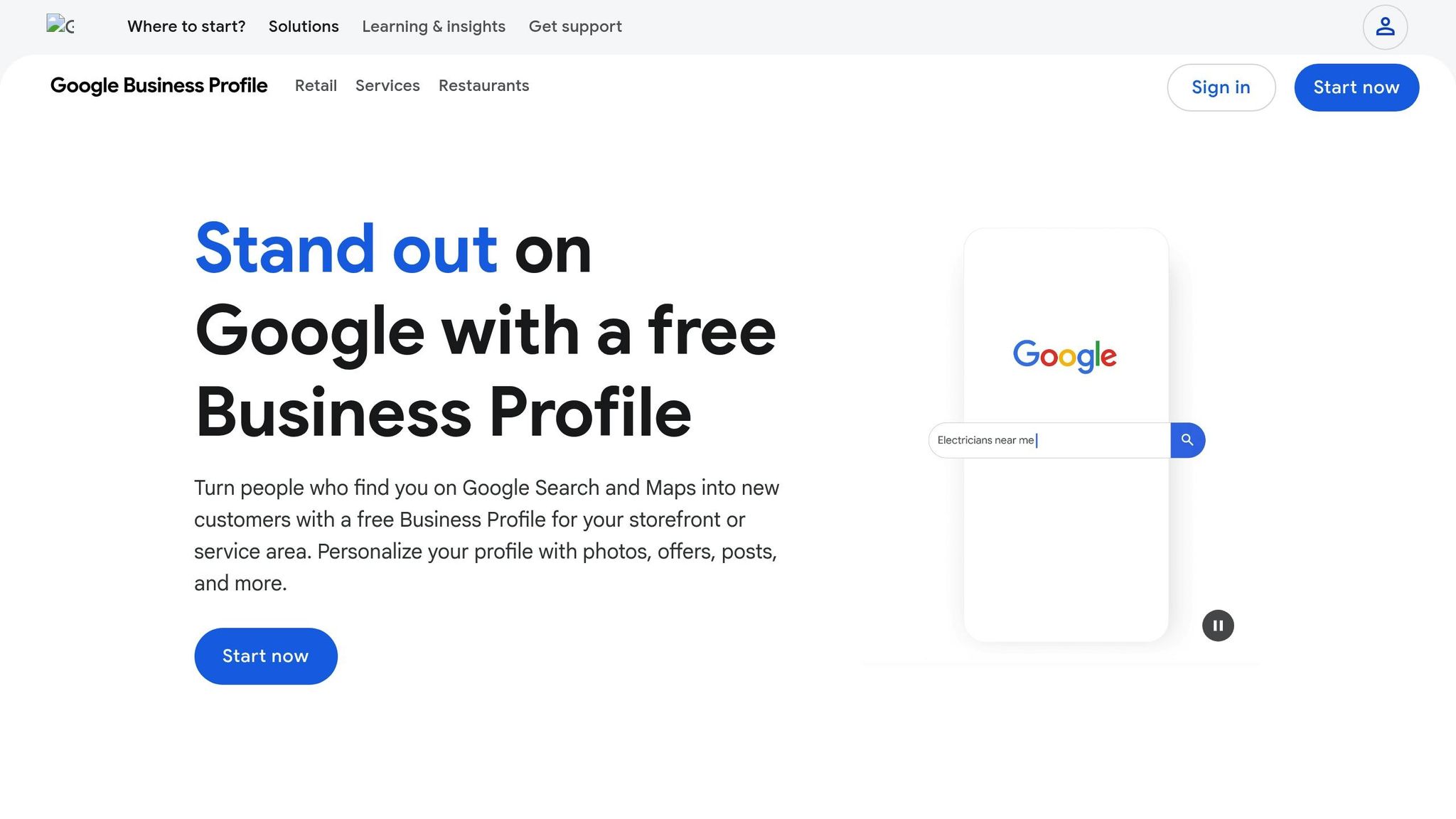
Your Google Business Profile is your ticket to visibility in local searches, especially in the Google Map Pack (the section that shows a map and highlights nearby businesses). To get started, claim and verify your profile at business.google.com. Once verified, fill out every section with accurate, up-to-date information about your business.
Include your service areas, contact details, and high-quality photos of your team, branded vehicles, completed projects, or your storefront. Use the business description to highlight what makes you stand out. For example: "Family-owned electrical contractor serving Springfield and surrounding areas since 2015. We specialize in residential panel upgrades, whole-home rewiring, and emergency electrical repairs."
Choose the most relevant business categories, set your hours (and update them for holidays), and enable direct messaging to make it easy for potential customers to reach you. These small details can make a big difference in how you appear in local search results.
Optimize Your Website for Local Search
Your website should connect with your local audience. Start by creating dedicated service area pages that naturally include location-specific keywords. For example, if you're a roofing company serving multiple towns, create a unique page for each town with its name in the title tag, headers, and throughout the content. Tailor the content on each page to include details like local building codes, common issues in the area, or even community projects.
Make sure your homepage clearly lists your main service areas. To help search engines better understand your business, use schema markup (specifically the LocalBusiness schema). Also, display your full Name, Address, and Phone (NAP) on your contact page to reinforce your local presence.
Since most local searches happen on mobile devices, your site needs to load quickly and display well on smaller screens. Tools like Google's PageSpeed Insights can help you fine-tune performance. Additionally, writing blog posts or articles about local topics can boost your visibility while positioning you as an expert in your community.
Don’t forget to tie your website efforts to customer reviews. They’re a key piece of the local SEO puzzle.
Get and Manage Online Reviews
Online reviews are a game-changer for local SEO. Google factors in the number, quality, and freshness of reviews when ranking businesses, so having a proactive strategy for collecting and managing reviews is essential.
After completing a job, follow up with your customers and encourage them to leave a review. A simple message like, "Thank you for choosing [Business Name] for your [service]. We'd greatly appreciate it if you could leave us a review on our Google Business Profile", can go a long way. Make it easy for them by providing a direct link to your review page.
Be sure to respond to every review - thank customers for their positive feedback and handle any negative reviews professionally. Acknowledge their concerns and offer a solution. This shows you care about your customers and are committed to resolving issues.
Use tools or notifications to monitor reviews across platforms so you can stay on top of new feedback. You can even showcase your best reviews on your website or social media to build trust with potential customers.
Run Geo-Targeted Paid Ads
Paid advertising gives you immediate control over who sees your business and when. While local SEO takes time to build momentum, geo-targeted ads can put you in front of potential customers right away - especially those actively searching for your services or casually browsing social media. The key is targeting the right audience in the right locations with a strong message, then consistently tracking results to refine and improve.
Set Up Google Ads for Local Leads
Google Local Service Ads can deliver high-quality leads when you focus on local targeting and high-intent keywords. Start by creating a Search campaign that zeroes in on specific zip codes or a set radius around your service area. For instance, if you’re an HVAC company in Phoenix, you might target a 15-mile radius or specific neighborhoods you want to expand into.
Keywords are critical here. Focus on high-intent phrases like "emergency plumber near me", "AC repair Phoenix", or "24-hour electrician." These terms often indicate immediate need and tend to convert better than generic searches. Keep in mind that these keywords can be pricey ($20 to $50 per click or more in competitive markets), but they attract customers who are ready to book.
Enhance your ads with call and location extensions to make it easy for mobile users to contact you directly. Tailor your ad copy to local customers by being specific. Instead of something generic like "Best HVAC Services", try "
Same-Day AC Repair in Phoenix | Licensed & Insured | Call Now.
Highlight what sets you apart, such as same-day service, upfront pricing, or a satisfaction guarantee.
Track performance carefully. While cost per lead is a useful metric, the real focus should be cost per booked job. For example, if you’re spending $50 per lead but only 20% of leads convert, your actual cost per booked job is $250. Make sure your ad spend aligns with your average ticket size and profit margins.
Don’t forget to use negative keywords to avoid wasting money on irrelevant searches. If you don’t offer DIY advice or sell parts, exclude terms like "DIY", "how to", or "parts" to filter out unqualified clicks.
For field service businesses, tools like Service Empire AI can simplify the process. We offer pre-built Google Ads campaigns tailored to high-intent searches, emergency call-only ads, and Performance Max campaigns, so you can hit the ground running without starting from scratch.
Run Facebook and Instagram Ads Locally
Once you’ve captured high-intent leads with Google Ads, expand your reach on social media. Facebook and Instagram ads work differently because they’re about catching people’s attention while they scroll, not targeting active searches. The upside? You can tailor ads to specific demographics, interests, and behaviors, often at a much lower cost per click, typically $1 to $5 compared to $20+ on Google.
Start with a local awareness campaign targeting users within a specific radius of your service area. Add filters like age, homeowner status, or income level to zero in on your ideal customer.
Seasonal promotions are a great way to stand out. A heating company might advertise furnace tune-ups in October, while a landscaping business could promote spring cleanup packages in March. High-quality visuals are essential here. Use photos of your team, completed projects, or branded trucks. Short video ads, like before-and-after transformations or quick testimonials, often perform even better.
Keep your ad copy conversational and focused on benefits. Instead of "Professional Plumbing Services", try something more engaging like, "Leaky faucet driving you crazy? We’ll fix it today - no mess, no stress. Serving [City Name] families since 2010." Always include a clear call-to-action, such as "Call Now for a Free Quote" or "Book Your Appointment Today."
Lead ads are particularly effective on Facebook and Instagram. These ads allow users to submit their contact info directly without leaving the platform. Forms auto-fill with their name, email, and phone number, making it easy for them to request a quote or schedule a service call. Be ready to follow up within 15 minutes to maximize conversions.
Retargeting is another powerful strategy. Install a Facebook Pixel on your website to track visitors, then create ads that follow them on social media. For example, if someone visits your "Water Heater Installation" page but doesn’t call, you can serve them an ad offering a discount or highlighting your fast response time.
Service Empire AI can help here too, with tools to create Meta lead ads and retargeting campaigns specifically designed for field service businesses. We handle the messaging and structure, so you don’t have to.
Track and Adjust Campaign Performance
Once your ads are live, monitoring them closely ensures you’re getting the most out of your budget. Define your key metrics beyond just clicks and impressions.
While cost per lead is important, cost per booked job is the metric that truly matters. If you’re generating 10 leads at $50 each but only converting 2 of them, your real cost per booked job is $250. Monitor this weekly to identify any issues early.
Average ticket size is another crucial factor. A campaign that generates cheaper leads may not be as profitable if those leads only result in small jobs. For example, if one campaign brings in $500 service calls and another generates $3,000 installations, you might want to shift more budget to the higher-value campaign, even if the cost per lead is higher.
Use call tracking numbers to pinpoint which campaigns are driving phone calls. Tools like CallRail or CallTrackingMetrics assign unique phone numbers to each ad campaign, letting you see exactly which ad prompted a customer to call. This is especially useful for service businesses that rely heavily on phone leads.
Review your campaigns at least weekly. Identify the best-performing keywords, ad copy, and targeting settings, and reallocate your budget accordingly. Pause ads or keywords that aren’t converting. For instance, cutting a keyword that costs $200 per lead and shifting that budget to one costing $75 per lead can boost your ROAS.
Experiment with different ad variations to see what resonates most. Test headlines, offers, and images, and let them run for a week or two to gather enough data. Even small tweaks, like changing "Call Now" to "Get a Free Quote", can impact conversion rates.
Finally, think long-term. Track customer lifetime value, not just the initial job. A $300 drain cleaning customer today might turn into a $5,000 client over the next few years if you maintain a strong relationship. This perspective helps you determine how much you can afford to spend on acquiring new customers and ensures your marketing efforts align with your business goals.
Service Empire AI offers tools to simplify this process, including KPI dashboards, weekly review systems, and strategies for tracking true acquisition costs and profit margins. These resources are designed to help you scale your campaigns effectively while staying focused on what works.
Build a Review, Referral, and Retention System
Paid ads are great for bringing in new customers, but your existing clients? They’re your real goldmine. Keeping them around not only turns one-off jobs into steady income but also earns you trusted referrals. Here’s how you can turn reviews, referrals, and retention into solid local growth.
Create a Review Collection Process
Online reviews are a game changer. They boost your local search presence and influence potential customers. But don’t just wait for reviews to roll in, actually be proactive. After completing a job, ask happy customers for feedback right away. Send a personalized message that mentions the service you provided and includes a direct link for leaving a review. This steady, systematic approach can help you build a strong collection of positive feedback.
Once reviews come in, respond thoughtfully. Thank customers for positive comments and handle negative feedback professionally. Show you’re committed to making things right as it builds trust with future clients. Just a heads-up: don’t offer incentives in exchange for positive reviews. If you want to show appreciation, make it a simple gesture, like a thank-you note, without tying it to a specific rating.
Set Up a Referral Program
Referrals are pure gold because they come with built-in trust. Friends and family trust each other’s recommendations. A solid referral program like this example gives your happy customers an easy way to spread the word. Make sure your program is simple to understand and clearly outline how referrals work. For example, only count referrals after a service is completed to avoid confusion.
Offer something meaningful in return, like a cash reward, a gift card, or a discount on future services. Promote your program everywhere: on invoices, in follow-up emails, during service calls, and across your social media. Use a straightforward system, like a spreadsheet or CRM, to track referrals and ensure rewards are sent promptly. You could even add tiered rewards to encourage customers to keep referring others.
Use Email and SMS for Customer Retention
A lot of businesses lose touch with customers after a job is done, missing out on future opportunities. Staying in touch can turn one-time clients into loyal regulars.
Segment your contact list based on past services to keep your messages relevant. Automated emails or texts can remind customers about routine maintenance or seasonal promotions, sparking repeat business. Email is great for ongoing updates, but SMS works wonders for time-sensitive messages like appointment reminders or last-minute openings. Keep messages short and sweet, and always include an easy opt-out option.
Track how well your outreach is working by monitoring metrics like open rates and bookings. Then, tweak your approach based on what’s working. Consistent, relevant communication not only keeps customers coming back but also builds loyalty, creating a steady stream of business.
To make all this even easier, tools like Service Empire AI can help you draft automated messages and plan the sequences. With pre-built email sequences, SMS templates, and engagement dashboards, you can streamline your campaigns while focusing on what you do best: providing top-notch service.
Create Systems to Scale Your Marketing
To grow your local business consistently, you need systems that scale. When you swap guesswork for clear processes and tracking, you can execute your marketing with precision. Well-designed systems let you grow without burnout, delegate tasks without sacrificing quality, and make decisions rooted in real data.
Document Your Marketing Processes
If you want your marketing to stay consistent, start by documenting your workflows. Write down the steps for tasks you handle regularly whether it’s requesting reviews after a job, optimizing your Google Ads, or running monthly email campaigns. This turns your know-how into a guide your entire team can follow.
Focus on the tasks you repeat most often. Break them into easy-to-follow steps. For example, create instructions for collecting reviews, fine-tuning ad performance, or crafting email campaigns. These don’t need to be fancy. Simple Google Docs or Word files work just fine. The key is to ensure your marketing efforts stay consistent, whether you’re managing them yourself, delegating to a team member, or onboarding someone new. A reliable playbook keeps your branding consistent, reduces mistakes, and makes it easier to spot when something’s off.
If you don’t want to start from scratch, tools like Service Empire AI can help. We offer free generators and SOP template builders tailored to service businesses. You can quickly create workflows for review collection, ad optimization, or email campaigns. With everything documented, tracking results becomes a breeze.
Track Results with a Marketing Scorecard
To improve your marketing, you need to measure its performance. A marketing scorecard helps you identify what’s working and what’s not. Instead of guessing where your leads are coming from or how effective your budget is, you’ll have a clear breakdown of your efforts.
Your scorecard should focus on three key areas: traffic and visibility, lead generation, and conversion and revenue. For traffic, track metrics like website visits, Google Business Profile views, and social media reach. For lead generation, measure how many phone calls, form submissions, and chat inquiries you receive weekly. For conversion and revenue, keep an eye on how many leads turn into booked jobs, the average value of those jobs, and your cost per customer acquisition.
To get even more precise data, break these metrics down by channel and location. A simple spreadsheet with columns for metrics and rows for each channel works well. Update it weekly to spot trends early, like a dip in leads from a specific ad or a surge in traffic that isn’t leading to bookings.
When you consistently monitor your scorecard, you can make smarter decisions. If a channel isn’t performing, you can tweak your approach before wasting more money. And when something works, you can double down to maximize results.
Use Service Empire AI to Scale Operations
Scaling your marketing is all about working smarter. By analyzing your scorecard data and refining your processes, you can use tools like Service Empire AI to expand your efforts efficiently.
Service Empire AI offers a suite of free tools designed to help service businesses grow. These include over 100 prompts across 18 categories, covering everything from localized marketing strategies to high-converting landing page templates and KPI dashboards for tracking performance. You can easily generate Google and Facebook ad campaigns tailored to your area, create trade-specific SOPs for your team, and even develop hiring prompts to find the right people to manage your marketing.
For example, if you’re planning to expand into new locations, you can use their multi-location prompts to create a customized launch plan. If your email campaigns feel scattered, you can set up automated follow-up sequences that keep customers engaged without requiring constant input.
These tools are built by people who’ve scaled service businesses to massive success, so they’re based on practical experience rather than theory. Plus, they’re entirely free; no credit card required. This means you can test their frameworks and systems without any financial risk, tapping into proven strategies that have helped build thriving businesses without the need for costly consultants or software subscriptions.
Conclusion
Growing your local service business comes down to mastering the basics: define your service area, fine-tune your Google Business Profile, run geo-targeted ads, and create systems for generating reviews and referrals. The secret is sticking to proven strategies, executing them consistently, and tracking what delivers results.
By combining local SEO, paid ads, and a steady flow of reviews and referrals, you can build a business that's both scalable and sustainable. When you document your processes, analyze your data, and tweak your approach based on what actually works, you create a marketing system that runs smoothly without overwhelming you.
For those looking to simplify this process, specialized tools can make all the difference. Service Empire AI is designed specifically for service business owners, making it easier to implement these strategies without needing advanced marketing expertise or a hefty budget. The platform provides over 100 prompts across 18 categories, helping you create everything from localized ad campaigns to review collection workflows and KPI dashboards. With it, you can craft Google and Facebook ads tailored to your audience, develop SOPs to keep your team on track, and build hiring frameworks to ensure you bring on the right people to support your growth.
What sets Service Empire AI apart is that it’s built by operators who’ve scaled service businesses to nine figures. These systems are time-tested and results-driven. Best of all, it’s completely free; no credit card required. You gain access to tools that would typically cost thousands in consulting fees or software subscriptions.
If you’re ready to grow your local service business, start with one strategy. Track your progress, adjust as needed, and lean on tools like Service Empire AI to streamline the process. With the right systems in place, you can build a marketing engine that consistently attracts new customers and grows your business without the burnout.
FAQs
How can I define the right service area to boost my local business profits?
To create a service area that boosts profitability, begin with thorough market research. Look into local demand and assess the competition in your region. Pinpoint your ideal customers by examining factors like their location, income levels, and specific needs. Then, target areas where these customers are most concentrated.
Next, evaluate how efficiently your business operates. Consider things like travel times, fuel expenses, and the density of jobs in a given area. This helps ensure you're not stretching your resources too thin.
By concentrating on areas with the most potential and streamlining your coverage, you can enhance customer satisfaction, cut unnecessary costs, and achieve steady growth for your business.
What are the most important local SEO strategies to help my business rank higher in local searches?
To make your business shine in local search results, here are some practical steps you can take:
- Polish your Google Business Profile: Fill out every detail, from your business hours to contact info, and add high-quality photos. Don’t forget to encourage customer reviews - they matter!
- Craft location-specific content: Use keywords that tie your services to your local area to connect with nearby customers.
- Maintain consistent citations: List your business on trusted directories, ensuring your name, address, and phone number (NAP) are the same everywhere.
- Engage with online reviews: Respond to reviews (both good and bad) to show you care about customer feedback and build trust.
- Optimize for mobile users: Make sure your website loads quickly and works perfectly on smartphones.
- Earn local backlinks: Collaborate with nearby businesses or organizations to get backlinks, boosting your visibility in the community.
These strategies can help your business connect with more local customers and strengthen its online presence where it matters most.
How does Service Empire AI help grow my local service business with effective marketing strategies?
Service Empire AI offers AI-powered tools tailored specifically for local service businesses, helping you elevate your marketing game and expand your customer base. These tools assist in fine-tuning your local SEO, managing and enhancing your Google Business Profile, and crafting geo-targeted ad campaigns to connect with the right audience in your community.
By leveraging real-time data analysis and automation, you can customize your marketing efforts, handle repetitive tasks more efficiently, and concentrate on strategies that deliver real impact. The result? More qualified leads, better ROI, and stronger customer loyalty, all while freeing up your time for what matters most.
Ready to Write Copy That Commands Attention and Drives Sales?